Why SlashID
Identity ProtectionBlogDocumentation
Why SlashID
Use Cases
Discover Identity RiskEliminate IAM DebtIdentity Threat Detection & ResponseIdentity Security Posture ManagementAutomate Compliance Gap AnalysisSecure Non-Human Identities & AI AgentsStop Phishing AttemptsStop Impersonation & Deepfake AttacksDiscover & Block Shadow AppsIdentity ProtectionBlogDocumentation

Stop Phishing Attempts

Stop phishing attacks in real-time where they occur—the browser. Detect and block credential theft before users can submit sensitive information.

Get a demo

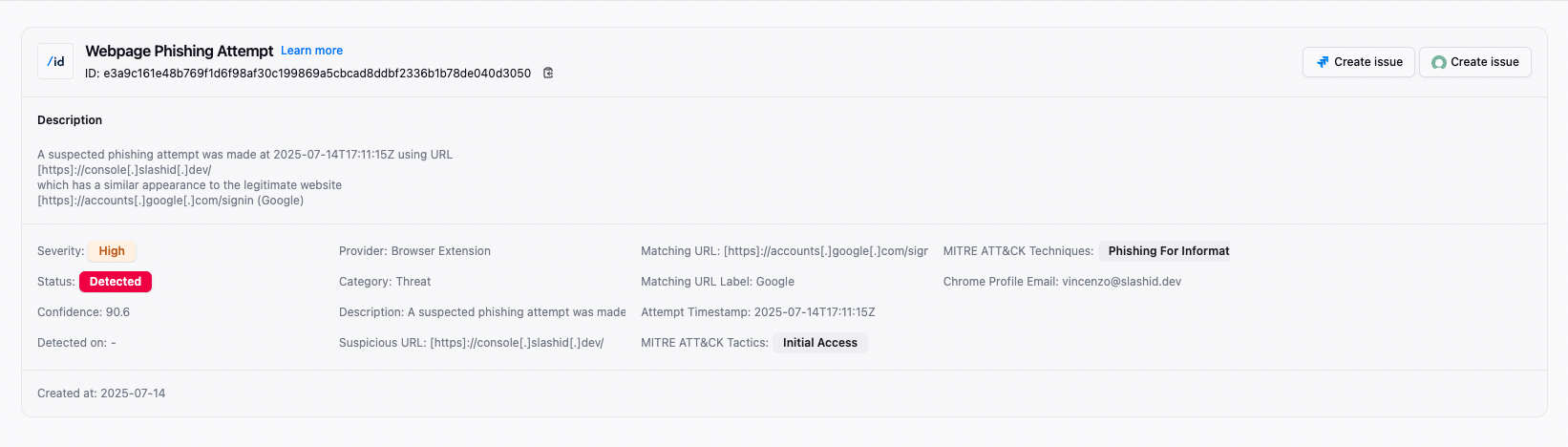
Phishing attacks trick users into handing over valid credentials long before back-end tools ever see an alert. The SlashID browser extension inspects pages in real time, warns or blocks risky submissions, and triggers identity-aware challenges—stopping credential theft at the point of click.
Benefits

How it helps

Protect credentials before they are breached

Users are warned or blocked before secrets are entered.

Real-time threat detection

Inspect DOM, evaluate URL reputation, and analyze form behavior as pages load—before credentials can be submitted.

Immediate signal for IR

incidents auto-create tickets with full URL and identity context.

Frictionless rollout

push the extension through existing browser management; no proxies.
Easy to deploy

How it works

Inspect

extension evaluates DOM, URL reputation, and form behavior as pages load.

Decide

policy engine checks against brand impersonation, typosquats, and risky flows.

Act

warn/block submission, trigger extra auth, and notify SOC with captured context.

Stop Phishing & Vishing Attempts Dashboard
Previous

Secure Non-Human Identities & AI Agents

Next

Stop Impersonation & Deepfake Attacks

Ready to stop phishing attacks?

Protect your users with real-time browser protection that blocks credential theft before it happens.

Book a Demo
Terms · Privacy · System Status
© 2025 SlashID® Inc. All Rights Reserved.

Products

Why SlashID
Identity Protection Use Cases
Identity Management

Resources

Blog Documentation

We use cookies to improve your experience. Read our cookie policy.